Call us now :08045804921
 Send Inquiry
 Send Inquiry
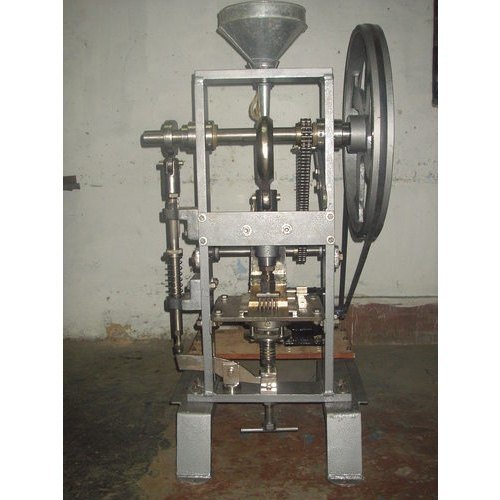
Camphor Tablet Presses
Camphor Tablet Presses Specification
- Phase
- Single Phase
- Torque
- Standard
- Shape
- Round and other custom shapes
- Diameter
- Up to 32 mm
- Product Type
- Camphor Tablet Presses
- General Use
- Tablet forming and pressing
- Material
- Mild Steel (MS), Stainless Steel (SS)
- Type
- Single Rotary Tablet Press
- Capacity
- 3000-5000 tablets/hour
- Weight (kg)
- Approx. 350 kg
- Computerized
- No
- Automatic
- Yes
- Touch Screen
- No
- Control System
- Manual/Mechanical
- Surface Treatment
- Powder Coated
- QC System
- In-process quality checking
- Tolerance
- ±0.05 mm
- Voltage
- 220-240 V
- Dimension (L*W*H)
- 700 x 900 x 1500 mm
- Feature
- High efficiency, robust construction, easy operation
- Color
- Green
- Operating Temperature
- 5°C to 40°C
- Output Speed
- 30-50 RPM
- Number of Stations
- 8 to 10
- Power Consumption
- 2 HP
- Pressing Force
- Up to 60 kN
- Operating Noise Level
- <75 dB
- Mobility
- Fitted with wheels for easy movement
- Suitable For
- Camphor, detergent tablet, salt tablet, chemical tablet forming
- Minimum Tablet Thickness
- 2 mm
- DIE Cavity
- Single
- Maximum Tablet Thickness
- 8 mm
- Safety Features
- Overload protection, emergency stop button
- Installation Type
- Floor-mounted
- Lubrication System
- Centralized manual lubrication
Camphor Tablet Presses About
JOGI ENGINEERING INDUSTRIES is the main producer of various kinds of tablet press machine including camphor tablet press machines. The machine is mostly intended for squeezing the tablet as camphor. The super fundamental element of this machine is that it can make the camphor tablet in three sizes: enormous size, medium size, and little size. Simply by utilizing various bites the dust might a solitary machine at any point make every one of the measures of camphor tablets.
This camphor tablet machine is minimal to such an extent that it tends to be fitted into a little space, and significantly, it requires a decent electrical association. The filler is given as the unrefined substance in the camphor tablet press machine. In particular, in light of the fact that the machine can take care of up with the gooey material, one should keep up with the quality and amount of the powder. From that point forward, the material is filled the pass on from the camphor tablet machine, which fabricates the camphor tablet.
Efficient Tablet Production for Diverse Applications
Designed for versatility, this single rotary tablet press accommodates camphor, detergent, salt, and other chemical tablets. With high output speeds (up to 5,000 tablets per hour) and customizable dimensions, it suits both small and large-scale production environments. The heavy-duty build ensures long-term, robust operation, while manual/mechanical controls offer straightforward use without requiring computerization.
Advanced Safety and Mobility Features
Operator safety is ensured through built-in protections such as overload prevention and an emergency stop button. The press is also highly mobile thanks to its wheel-fitted base, making it easy to reposition within the manufacturing area. The centralized manual lubrication system guarantees smooth operation and easy maintenance, supporting continuous production processes.
Superior Build Quality and Quality Control
Constructed from high-grade stainless and mild steel, the press features a durable powder-coated surface and precision tolerances (0.05 mm). Ongoing in-process quality checking helps deliver consistent products. Its compatibility with various tablet shapes, thicknesses, and materials makes it suitable for manufacturers looking for both reliability and flexibility.
FAQ's of Camphor Tablet Presses:
Q: How does the centralized manual lubrication system work in the Camphor Tablet Press?
A: The centralized manual lubrication system allows operators to apply lubricant precisely to critical moving parts through designated points. This simplifies maintenance and ensures smooth, uninterrupted operation without the complexity of fully automated lubrication systems.Q: What benefits does the overload protection system provide during tablet production?
A: The overload protection system prevents damage to the press and its motor by automatically disengaging or stopping the machine if excessive force or jamming occurs, safeguarding both equipment and operator safety during continuous use.Q: When and where should the Camphor Tablet Press be installed for optimal performance?
A: This machine is best installed in a clean, temperature-controlled manufacturing environment (5C - 40C) with a stable, level floor. Its compact footprint and wheel-fitted base allow easy placement and repositioning within tablet production lines.Q: What types of tablets can be formed using this press, and what are the size limitations?
A: The press is suitable for forming camphor, detergent, salt, and chemical tablets. It supports tablet diameters up to 32 mm, thickness between 2 and 8 mm, and can accommodate round as well as custom shapes depending on the die used.Q: How does the in-process quality checking system enhance product reliability?
A: The in-process quality checking system ensures that each tablet produced meets precise dimensional and quality standards. This system enables early detection of any deviations, maintaining consistent product quality throughout production.Q: What is the typical process for producing tablets with this machine?
A: Operators load raw material powder into the hopper, set desired tablet parameters, and start the machine. The automatic rotary mechanism compresses the material in the selected die cavity, forming tablets at 30-50 RPM. Formed tablets are then ejected and collected for packaging or further processing.Q: What are the main usage and efficiency benefits for manufacturers using this tablet press?
A: Manufacturers benefit from high tablet output (up to 5,000/hour), easy operation, and low operating noise. The robust, powder-coated construction and mobility make it a reliable, long-lasting solution for diverse tablet production needs.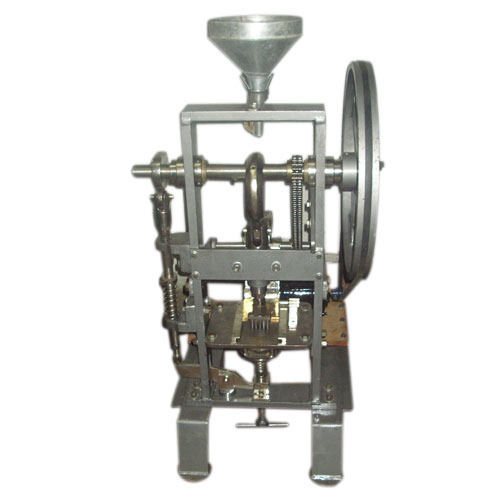
Tell us about your requirement

Price:
Quantity
Select Unit
- 50
- 100
- 200
- 250
- 500
- 1000+
Additional detail
Mobile number
Email

More Products in Camphor Machines Category
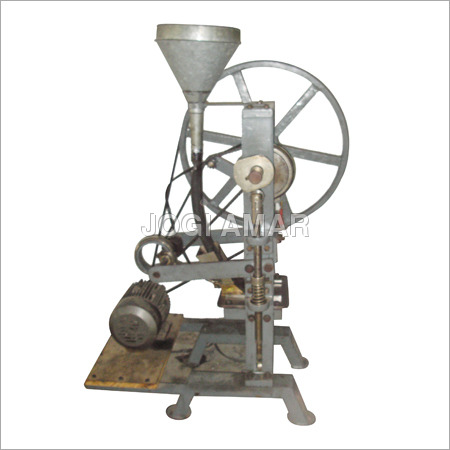
Camphor Making Machine
Price 87,000 INR / Piece
Minimum Order Quantity : 1 Piece
Touch Screen : No
Color : Blue & Silver
Tolerance : 0.02 mm
Dimension (L*W*H) : 1100 mm x 800 mm x 1200 mm
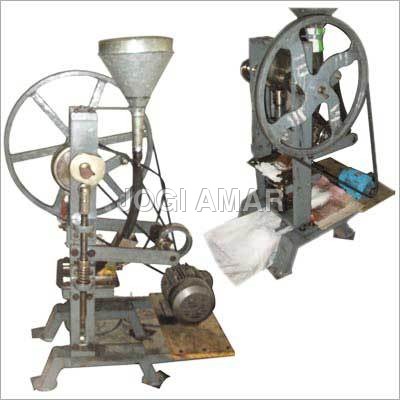
Camphor Making Machines
Price 87,000 INR / Piece
Minimum Order Quantity : 1 Piece
Touch Screen : No
Color : Grey/Blue
Tolerance : High Precision
Dimension (L*W*H) : Approx 915 mm x 610 mm x 1219 mm
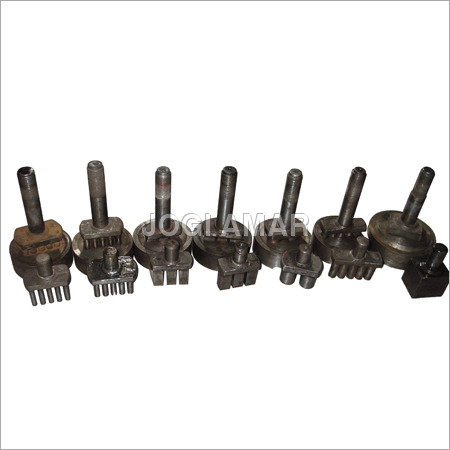
Camphor Dies
Minimum Order Quantity : 1 Unit
Touch Screen : No
Color : Silver/Grey
Tolerance : High Precision (0.02 mm)
Dimension (L*W*H) : Varies as per model and customization
Camphor Tablet And Slab Press Machines
Touch Screen : No
Color : Silver
Tolerance : Standard tolerance as per manufacturing guidelines
Dimension (L*W*H) : Standard dimensions available on request

 Send Inquiry
Our Products
- Candle Machines
- Chalk Moulds
- Camphor Machines
- Number Candle Moulds
- Silicon Moulds
- Candle Making Machines
- Designer Candle Moulds
- Fancy Candle Moulds
- Flower Candle Moulds
- Pillar Candle Moulds
- Silicone Candle Moulds
- Silicone Rubber Candle Moulds
- Scented Candle Moulds
- Aluminium Candle Moulds
- Soap Moulds
- Wax Melter
- Lipstick Moulds
- Lakshman Rekha Moulds


12/2, Ashwathkatte Road, Kasturibanagar, Mysore Road, Bengaluru - 560026, Karnataka, India

Mr Ajit Dhaliwal
(Proprietor)
Mobile :08045804921
 Send Inquiry
 Send SMS
 Call Me Free
Developed and Managed by Infocom Network Private Limited.
 English
 Spanish
 French
 German
 Italian
 Chinese (Simplified)
 Japanese
 Korean
 Arabic
 Portuguese